

Best Shopify agency for health and wellness brands in the USA in 2026

Updated at
19.11.2026
A health and wellness store is not a normal store. Subscriptions, claims, trust and repeat orders are the product - and the agency has to know that before it designs a single page.
This guide covers the best Shopify agency for health and wellness brands in the USA: what a wellness store needs that a normal store does not, what it costs, and how to pick the right one in one afternoon.


Best Shopify agency for health and wellness brands: the short answer
The best Shopify agency for a health and wellness brand is the one that has shipped wellness stores before - subscriptions that actually renew, product pages that sell without making medical claims, and a checkout that buyers trust with their health. A general agency can build a pretty store. A wellness agency builds a store that keeps a customer coming back every month, because repeat orders are where a wellness brand makes its money.
The numbers frame the decision. US agency developers typically charge $150-$300 an hour, as reported on Clutch, and a full wellness store build - design, subscriptions, checkout and the ads around it - is a project, not an hourly job. Shopify plans run $39-$399 a month, and Plus starts from $2,300 a month, as listed by Shopify. Our guide to choosing a Shopify agency in the USA covers the agency side in general, and what Shopify experts charge covers the rates - this guide covers what is different when the store sells supplements, skincare, vitamins or fitness products.
What to compare: wellness stores vs normal stores
| What to compare | What a wellness store needs | Why it matters |
| Subscriptions | The core of the business: subscribe and save, pause, skip, swap flavours | A normal store sells once; a wellness store sells every month, and the subscription flow is the product |
| Product pages | Ingredients, benefits and trust signals - without making medical claims | A wellness page that promises a cure gets the store in trouble; a page that shows proof sells |
| Checkout | One-page, fast, with a subscription choice built in, not bolted on | Every extra step loses buyers - and a buyer who quits at checkout rarely comes back |
| Design | Calm, clean, credible: soft colours, real product shots, honest reviews | A wellness store that looks like a discount store sells like one - trust is the design |
| Ads | Meta Ads that sell the routine, not the product - before and after, routines, reviews | The ad that promises a result has to land on a page that proves it |
| Best for | Brands with repeat orders: supplements, skincare, vitamins, fitness, nutrition | A one-time purchase store does not need a subscription agency - a repeat-order store does |
What separates a real wellness Shopify agency from a general one
Three things decide whether the agency you hire actually moves the store forward. Everything else is decoration.
1. They have shipped subscriptions that renew
A real wellness agency can show you a store where the subscription works: subscribe and save, pause, skip a month, swap a flavour, cancel without a fight. Ask for the renewal rate, not the design. If the agency has never built a subscription flow, your first hundred subscribers will teach it - and they will teach it by leaving. Our Shopify Plus vs Shopify covers when a growing store needs the step up, and the speed optimisation guide covers the numbers a store should hit - a slow subscription page loses renewals before it loses buyers.
2. They know what a product page can and cannot say
A wellness product page lives under real rules: no medical claims, no guaranteed results, no promises the product cannot keep. The agency has to know where the line is - and design the page to sell inside it, with ingredients, reviews, routines and proof instead of promises. A store that crosses the line gets its ads rejected and its payment provider nervous. Our guide to writing Meta Ads that convert covers the same line on the ad side - the ad and the page have to agree, or the ad gets rejected.
3. They build the store and the ads as one system
A wellness store works when the store, the Meta Ads and the email flows are built together - the ad that sells a morning routine has to land on a routine, and the checkout has to offer the subscription, not hide it. The Shopify service covers the store build, and the Meta Ads service covers the ads that send buyers to it - the two have to be built together, because the ad that promises a bundle has to land on a bundle. Our Shopify plus Meta Ads funnel guide covers how the two fit together, step by step.
The traps: subscriptions, claims and the trust problem
Wellness stores fail in three places, and all three look like small decisions at the time:
The subscription trap. A subscription that is hard to pause or cancel creates angry customers and chargebacks - and chargebacks cost more than the subscription is worth. Build the pause, the skip and the cancel into the flow from day one, and make them easy to find. A store that traps subscribers loses them twice: once when they leave, once when they tell everyone.
The claims trap. A product page or an ad that promises a result the product cannot prove gets the ad rejected, the account flagged, and the brand in trouble. Sell the routine, the ingredients and the reviews - never the cure. Check the claims on every page and every ad before launch, and check them again every month.
The trust trap. A wellness buyer is buying something they put in or on their body. If the store looks cheap, loads slowly, or hides who is behind it, the buyer leaves. Show the ingredients, show real reviews, show the brand story, and make the checkout fast and honest. Our 2026 store design trends cover what a store buyers trust looks like - clean, fast, and honest about what is inside the box.
How to decide in one afternoon
Five checks, one afternoon, and you will know which agency to pick:
- Can they show three live wellness stores with subscription numbers? Not screenshots, not a client list - live stores you can open on your phone, with the renewal rate and the repeat order rate.
- Do they know what a product page can and cannot say? Ask them where the line is on claims. An agency that has never thought about it will build a store that gets its ads rejected.
- Is the subscription built in, or bolted on? Subscribe and save, pause, skip, swap - if the subscription is an afterthought, the renewals will be too.
- What does it cost, all in? Platform, theme, apps, agency, and the monthly work after launch. Compare the full number, not the headline rate - and verify the agency on Clutch and the Shopify Partner Directory.
- Who owns the store after launch? Support, updates, testing - a wellness store needs an agency every month, not a one-time build. If nobody owns it, the subscription breaks quietly and the renewals slide.
If any answer is no, keep looking. The best Shopify agency for a health and wellness brand is the one whose stores keep customers coming back every month.
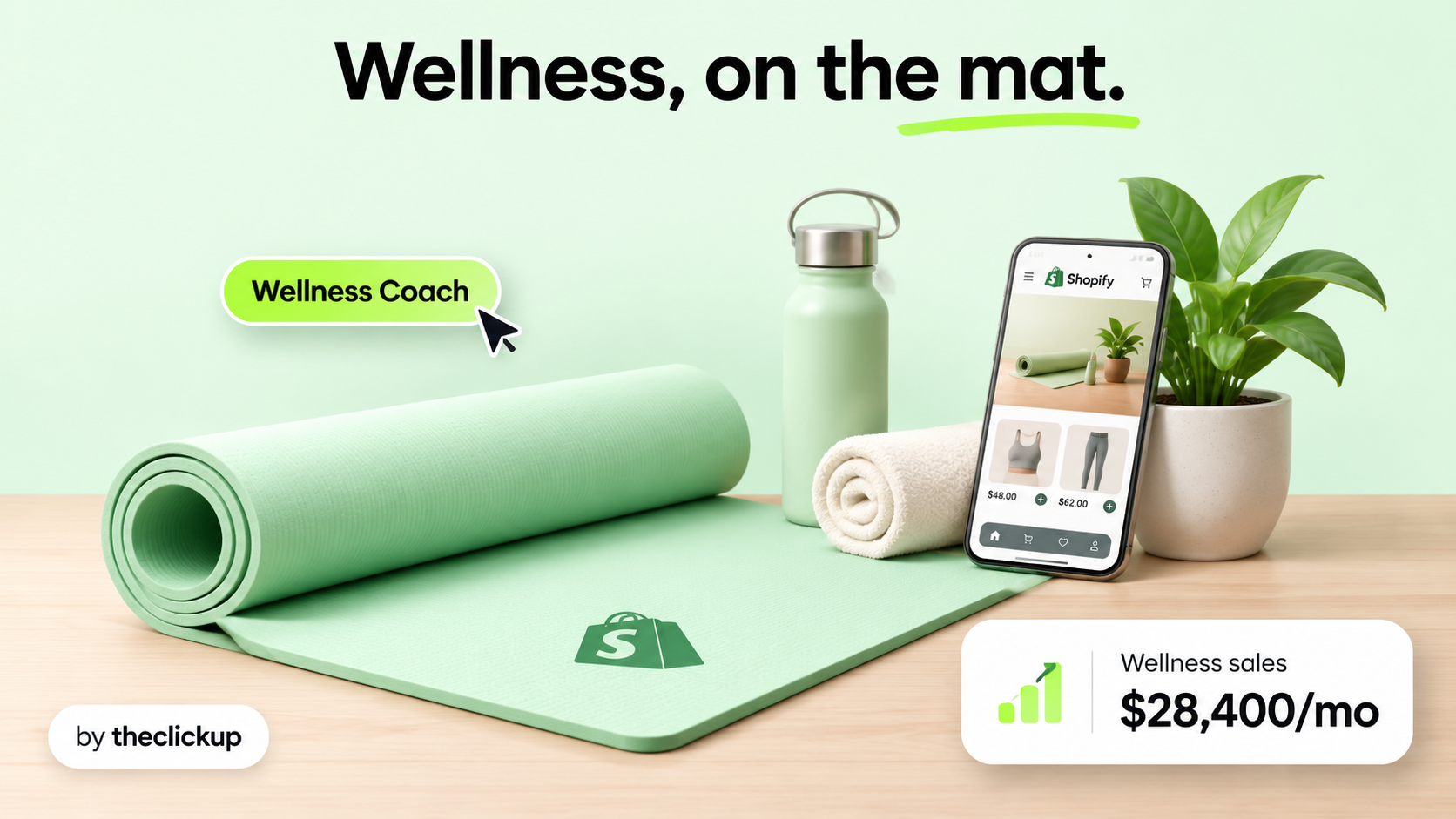
Already talking to an agency and not sure it understands wellness? Run the five checks in section 5 first - or ask us to review the proposal before you sign.
The verdict: pick the agency whose stores renew
The best Shopify agency for a health and wellness brand in the USA is the one with three live wellness stores you can open on your phone, subscription numbers to match, a clear answer on claims, and support after launch. Compare the full cost - platform, theme, apps, agency and monthly work - and verify the agency on Clutch and the Shopify Partner Directory before you sign. If you want help scoping your store, how to choose a Shopify agency covers the agency side, and theclickup builds Shopify stores for US health and wellness brands from Islamabad, Pakistan, alongside the Meta Ads that send buyers to them.
FAQ
What is the best Shopify agency for health and wellness brands in the USA?
The best agency is the one that has shipped wellness stores before - subscriptions that renew, product pages that sell without medical claims, and a checkout buyers trust. Ask to see three live wellness stores with renewal rates, and verify the agency on Clutch and the Shopify Partner Directory.
How much does a Shopify store cost for a health and wellness brand?
US agency developers typically charge $150-$300 an hour, as reported on Clutch, and a full wellness store build is a project, scoped per brief. Shopify plans run $39-$399 a month, and Plus starts from $2,300 a month, as listed by Shopify - plus the theme, the subscription app and the monthly work.
Does a wellness store need subscriptions?
For most wellness brands, yes - repeat orders are where the money is. Subscribe and save, pause, skip and swap must be built into the store from day one, not bolted on later. A store that traps subscribers loses them twice: when they leave, and when they tell everyone.
Can a Shopify store sell supplements and vitamins in the USA?
Yes, with care: the product pages and the ads must not make medical claims or promise results the product cannot prove. Sell the routine, the ingredients and the reviews - never the cure - and check the claims on every page and ad before launch.
Read more

 advantage

 Book a call

Fill out the form
or brief with questions



 LinkedIn
 Instagram
Welcome to The ClickUp privacy notice.
The ClickUp respects your privacy and is committed to protecting your personal data. This privacy notice will inform you as to how we look after your personal data when you visit our website (regardless of where you visit it from) and other sites we own and operate. And tell you about your privacy rights and how the law protects you.
We may change the privacy policy from time to time to reflect changes to the products and services that we provide and how we process your personal data.
We will not share your information with any third party outside of our organization, other than as necessary to fulfil your request if any."
INFORMATION WE COLLECTWhen you visit our website, our servers may automatically log the standard data provided by your web browser. This data is considered “non-identifying information”, as it does not personally identify you on its own. It may include:
- Your computer’s Internet Protocol (IP) address;
- Your browser type and version;
- The pages you visit;
- The time and date of your visi;
- The time spent on each page;
We may ask for personal information, such as your name and email address. This data is considered “identifying information”, as it can personally identify you. We only request personal information relevant to providing you with a service, and only use it to help provide or improve this service.
We collect information by fair and lawful means, with your knowledge and consent. We also let you know why we’re collecting it and how it will be used. You are free to refuse our request for this information, with the understanding that we may be unable to provide you with some of your desired services without it.
We will only process personal data and communicate with you if:
1. You have given us consent to the processing of your personal data and communicating for one or more specific purposes i.e. requesting products or services from us, downloading material or information from our website or submitting a contact us form.
2. Performance of a contract
3. Where we have a legitimate interest for contacting you in relation to our products and services
DATA PROCESSING AND STORAGEWe only retain personal information for as long as necessary to provide a service, or to improve our services in future. While we retain this data, we will protect it within commercially acceptable means to prevent loss and theft, as well as unauthorised access, disclosure, copying, use or modification. That said, we advise that no method of electronic transmission or storage is 100% secure, and cannot guarantee absolute data security.
Rights and choices of individuals:
- See what data we have about you, if any;
- Change/correct any data we have about you;
- Have us delete any data we have about you;
- See what security measures we apply to your data;
- Express any concern you have about our use of your data;
You may opt out of any future contacts from us at any time. You can do the following at any time by contacting us via the email address given on our website: theclickup.com
Got questions or want to discuss a project?


